

“In the land where I was born,
Lived a man who sailed to sea.”
– The Beatles

And our friends are all aboard
When it comes to figuring our how to make money, there’s no one better than Warren Buffet. And when it comes to figuring out how to talk about that money, it’s no surprise the master is yet again at the top of the class.
In this article in the Harvard Business Review, Karen Berman and Joe Wright explain Buffet’s effectiveness in conveying financial information about Berkshire Hathaway’s performance in his annual letter to shareholders. Recognizing that we humans experience our world through stories just as much when we’re adults as when we’re children, Buffet boils complicated financial information and data into simple, logical and easily grasped stories. He knows that from the time we are two, we learn about the world and see the word through stories. That’s just how our brains are wired. He innately understands that the financial communicator’s role is less about data transmission and more about good, old-fashioned storytelling.
Every story has a beginning (“Once upon a time . . .”), characters (“and there was a company . . .”) and action (“this happened, this happened and then this happened”). And most important, every good story has a moral or, in today’s MBA-jargon world, a “takeaway.” For example,
“Once upon a time, there was a company that sold widgets. And they were very good at selling widgets. But one long, cold winter when there was a dark cloud across the land, no one would buy their widgets no matter how hard they tried. So what did they do? They went out and talked to the people and asked them what they wanted in their widgets and how the company could serve them better. Then they went back to their factory and made some changes. Some of those changes were easy and didn’t cost anything, and some of them were hard and cost a lot of money. But they knew those changes were needed if they were going to sell widgets again. And you know what? Once spring came, the people started buying widgets again, slowly but surely. And things started looking better for the company.
And the moral of the story is the company did what it needed to do to turn things around so it’s a good time for you to buy copious amounts of their stock.”
Well, perhaps it wouldn’t be that exact moral, but you get the idea.
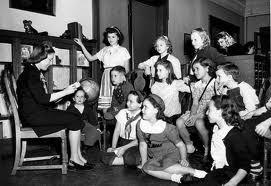
"Once upon a time..."
So what’s the moral of this story? If you’re in communications, get in touch with your inner child and start believing in fairy tales again. If you do, I’ll bet your results will no longer be grim (badda-bing), and you and your colleagues will live happily ever after.
The End