Having the Courage (and the Smarts) to Just Say No

“Just walk away, Renee,
You won’t see me following you back home.
The empty sidewalks on my block are not the same,
You’re not to blame.”
– The Left Banke

Ummm, no...

We fired a prospect today.

Or, to put it more politely, we elected to adhere to our corporate and personal values, trust our instincts and cut our losses.

Either way you put it, we walked away from a potential client in the midst of a stunningly long economic slow-down that all of us are just plain tired of talking about.

Why? Because it made sense. And dollars and cents.

We had had two exceptionally good meetings with the management team of a start-up here in North Carolina. Over the course of those sessions and a bevy of phone calls and emails, we felt we’d built up quite a rapport with them. In fact, we left the last meeting pretty much being told “You guys get us completely, and we’re looking forward to working with you.” We were smiling.

Now, our radar had been going off every now and again during our meetings as the company has yet to build a working version of its product that they believe will revolutionize their industry. All they have now is a prototype, a couple of patent pendings, manufacturing partners and money from friends and family. But if the product works as they hope, it very well could revolutionize an industry that touches virtually every one of us at home, work and school.

“If the product works…”

In our 26-plus years in this business, we can’t count the number of folks who came to us convinced they were going to revolutionize the world with a “groundbreaking,” “cutting-edge,” “truly innovative” (as if anything can be “falsely innovative”) and “game-changing” idea. (Think dot-coms here whose business plans were written on the backs of napkins.) But that’s not the main reason we declined (politely) to ask these guys to the prom. The primary reason was understanding and respect – a lack of understanding of what public relations is and an apparent lack of respect for it.

Yeah, yeah, we know; no real news here. But the lesson is still an important one.

As they are bootstrapping the company at this point, there’s just not a lot of extra cash sitting around. We understand tight budgets. Who doesn’t? So they had asked if we would consider keeping our fees low in the beginning and taking equity in exchange for some of the dollars. In all our years, we had never agreed to trade fees for equity, but this time we decided to give it a try as the product is seriously cool and would be a blast to help launch (assuming it works, of course).

We wrote our proposal to cover the usual stuff you cover in a strategic communications program: branding, messaging and the development and execution of an integrated public relations program. The budget was modest. Like really modest. Like way below six figures to support a regional launch (followed then by a national launch) over the next nine months. Pretty standard fare for a PR proposal, right? And we included a suggested budget split of two-thirds in cash and one-third in equity. We submitted the draft proposal for review.

The next day, the marketing veep writes back:
(1) the president will never approve a budget like this;
(2) you really ought to consider revising your fee structure and stretch it out over a longer period, say two or three years;
(3) you can have “profits interest” not equity (meaning we’ll get paid if and when they are profitable); and
(4) by the way, we’ve been talking to another firm that does marketing and design and it looks like you’re proposing to do work that overlaps with them. We need you to do the PR, not branding and messaging.

Now we’ve never been hesitant to put our credentials up against anyone, and we rarely, if ever, have backed down from a pitch. But this felt different. This felt as if we were being asked to be only a media pitch shop (“Just get us some PR so everybody in the U.S. hears about us. You know, send out some news releases and get ’em placed in the trades.”). He was seeing that age-old delineation between public relations and marketing/advertising. “Those guys will handle all the branding, messaging and all the marketing because they know how to do; we just need you to get us ink. And that really shouldn’t cost all that much, should it? Because we don’t have that much money right now, and we’ll have to pay the other firm.”

Heck, the prospect even struck through the word “marketing” when we used it in the term, “marketing public relations.” Clearly, we’re not speaking the same language much less being on the same page.

Now we’re not saying there’s anything wrong with being media specialists. Quite frankly, I admire folks who slog away at that every day and achieve meaningful results for clients. Gosh knows, they earn their pay, and it’s not something I want to do full-time (heck, I’d be on top of a book depository with a .30-06 inside of three weeks).

But the main point here is that being a media shop is not what Forge Communications was founded to be, it’s not what we want to do and we know that’s not how we can best help build value for our clients. We know firms that do that well for much less money, and we’re happy as mollasks to recommend them.

We believe we contribute most when we are full and equal partners on the business leadership team. We bring the most to the table when we’re allowed – wait, that’s wrong – when we’re invited to offer counsel and service that’s based on decades of experience helping companies of all shapes and sizes solve challenges so they can move into the future with confidence. When strategic communication consultants are told to keep their opinions to themselves and just stay put in the traditional “media shop box” – especially when traditional media are dissolving in front of our eyes( and may well be the wrong channel to use in the first place) – both the consultants and the clients lose. And neither we nor clients like it when scarce financial resources are squandered.

In this case, we decided a win-win could best be reached if we just walked away. No blood, no foul.

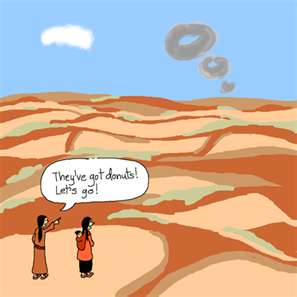
This really needs no caption...

You gotta know when (and here’s the important part) and be willing to fold ’em for your business and the client’s business.

And you know what? It feels really, really good.
 

The Future of Social Media: Here, There & Everywhere

“Breathe, breathe in the air,
Don’t be afraid to care.”
– Pink Floyd 

Twitter: The Beta Version

“I believe that in the future, social media will be like air – it will be anywhere and everywhere we want and need it to be.” – Charlene Li, one of the most influential voices in technology, in The Washington Times.

Assuming we take this analogy at face(book) value, we seem to be evolving into a society – or, perhaps more accurately, species – that cannot live without social media. There is no doubt there will be cynics, curmudgeons and just plain cranky-ites among us will consider that assessment heresy, but the fact of the matter is this: we are a tribal species, we know we are a tribal species and we like being a tribal species. Anything that helps us strengthen our ties to fellow members of the tribe, be it smoke signals, secret handshakes, handwritten letters, telephones or Pinterest is going to survive. It will evolve, of course (witness the changes we’ve seen in the telephone over the past 100 years), but the fact is communications channels that help us connect will survive because they help US survive.

My advice to individuals and tribes of individuals (you know, like a Fortune 500 company, local dry cleaners or a marketing public relations firm..): take a deep breath and jump into the grown-up end of the pool for fun – and profit.

Top 10 Ways to Trash Your Reputation

"And the Oscar goes to..."

10.  Wait until the last minute: why prepare now if it may not happen at all?

9.     Ignore your employees or members: it’ll just distract them.

8.     Ignore the media: heck, they’ll just twist the truth anyway.

7.     Play by your rules:  why give a hoot about what anyone else wants?

6.     Never accept responsibility or apologize: my lawyer always knows best!

5.     Ignore emotions:  feelings are for wimps – Facts Rule!

4.     Cooperate only when you have to: keep your head down and your mouth shut.

3.     Provide only the bare minimum: why invite confusion with details?

2.     Dazzle ‘em with jargon: if a little is good, then a lot is even better!

2b.  All this social media crap is just a passing fad.

And the Number One way to trash your reputation is:

1.     Ignore it, and it’ll go away…

It’s a Small World After All (that’s getting bigger every day)

“It’s a small world after all.”
– Walt Disney

So gosh darn cute...

Happened across this brief on the state of small public relations firms earlier today while perusing PRSA’s most excellent “Issues & Trends” daily e-newsletter. First off, we were delighted to see our good friend, colleague and Chair of the Counselor’s Academy of PRSA Ann Subervi and her firm, Utopia Communications, quoted in the story. Ann’s one of the best professionals on the scene today and is a tireless promoter of ethics in public relations practice and business. Way to go, Ann!

Closer to home, though, we’re sad to see that so many firms continue to struggle in this ridiculously tough economy in this ridiculously long recession that just friggin’ refuses to end (no matter what the economists say about the recession “ending” last year …). Too many good people and too many good firms are having to shut the doors on promising practices as clients continue – understandably, mind you – to curtail, postpone and cancel initiatives. The sheer number of inquiries, applications and requests for referrals we receive is a clear indicator that, while our industry is projected to grow in the years ahead, there is still a lot of pain being spread around right now in virtually every corner of the business.

The fact that large firms are cutting rates to compete for the smaller pieces of pie on the table is not surprising (nor will it be surprising when they raise ‘em right back up where they were next year). They have to generate income, as well, to be sure. What is surprising, though, is how and why clients believe they are getting some kind of a bargain in this deal. The days of the mighty mega-firm ruling the sea are drawing to a close as business comes to understand that the agility, flexibility, specialization and personal attention from seasoned consultants in smaller firms will help them fare much better than from the traditional “Welcome to the Big Top!” approach. Innovative thinking and truly personalized client attention are rarely nurtured in the layers upon layers of AEs, SAEs, VPs, SVPs, EVPs and the rest of the alphabet soup that comprises large firms. Open innovation is the watchword of the world today, and as futurist Alvin Toffler recently said, the organizations that serve as connectors will be the ones who succeed in the years ahead.

Further – and this is where it gets interesting for firms like Forge Communications – more and more of the best, brightest and most experienced consultants are finding the world of the smaller firm a very attractive work environment. Rather than just managing account teams and pushing paper (or pixels, as the case may be) up the administrative mountain, they find that working with a small group of senior professionals affords them the opportunity to get back to doing what got them into the business in the first place: working one-on-one with clients to solve real problems. In the last one week alone, we have been approached by no less than three senior vice presidents who want to talk with us about our experienced this past year in transitioning to this business model.

As we approach the firm’s first anniversary, we are thankful for the support we’ve gotten from friends, colleagues, family and, most especially, our clients with whom we wouldn’t be here. We feel blessed to have had a strong first year and are confident that 2011 will be a year of continued growth and success for the Forge team. More to the point, though, it will be a year of dedicated service to our clients because that’s where our business begins and ends.

So let’s here for the entrepreneurs out there for they are the ones who by virtue of their agility and ability to innovate on a dime will help move the profession successfully forward through this seismic wave of change.

Enhanced by Zemanta

QR Codes Offer PR Pros New Options


Yes, it actually does make sense


“Tell me more, tell me more!”
– “Grease”


Thanks to a good friend of ours, Chuck Norman, APR, of SA Cherokee here in the Triangle, we saw this brief from PRSA’s Tactics publication. What a terrific idea that is as powerful as it is innovative. While a large portion of the public does not – and likely will not – use QR technology regularly (half probably don’t know what it is), this tool offers unique value to those who do understand how to use it. Clearly, a driving force here is the continued growth of smartphones (heck, let’s just call ‘em what they are: hand-held computers that just happen to make phone calls, too) that make QR as easy as, well, pushing a button.

And while this article focuses on the use of QR in media relations and marketing, we can envision applying this technology in a host of public relations areas, including employee communications, investor relations and crisis communications. The key here is that we’re able to point stakeholders to a treasure trove of information online through an exceptionally simple – and easy-to-use – interface.

We’ll certain be including this technology in our recommendations to our clients and hope more and more of them will see the benefits of being in the Early Adopter Club.

Tagged: QRpublic relationsPRmarketingSA CherokeePRSATacticscrisis communicationsmedia relationsemployee communications

Enhanced by Zemanta

“‘The time has come,’ the Walrus said, ‘to talk of many things’”

“I am the eggman, no,
They are the eggmen, no,
I am the walrus, goo-goo-goo-joob.”
– John Lennon

I am he as you are he as you are me, and we are all together.

This from the “Oh no, this cannot be true” files …

A report from today’s Homeland Security Wire citing a story by USA Todays Rick Jervis indicates that BP’s 582-page emergency-response “plan” may never have anticipated a massive oil spill like the one threatening the Gulf of Mexico and entire East Coast these days, but gosh darnit, it did warn that a spill could endanger animals such as “seals, sea otters and walruses” in the Gulf.

Okaaaaaaay …

If you’re suddenly wondering if you’re remembering your fourth grade elementary school teacher’s lessons (and countless documentaries on “Animal Planet”) accurately, you are.  No such animals live in the Gulf of Mexico.  Maybe Prudhoe Bay in Alaska, but not in the warm waters off St. Petersburg, Fla.

While the “plan” (and again, we use that term pretty loosely here) was approved in July by the Minerals Management Service, an arm of the federal government, it now would seem that the massive document comprises mostly boilerplate language that was not tailored to the specific situation at hand.

It’s certainly true that many crisis plans have common strategies and tactics, however, comma, each crisis plan must be tailored to the organization’s specific environment and the contingencies that may be faced.

To cut and paste boilerplate language and call it a crisis response plan is not just lazy – in some cases, it’s absolutely criminal.

Related articles by Zemanta
Enhanced by Zemanta

The Lawyers are Coming, the Lawyers are Coming

“Beware of the sharks that swim on the land.”
– Jimmy Buffet

Oh the shark bites with his teeth bared, and he keeps them pearly white.

The New Jersey Star-Ledger reports that insurers have begun to sell liability policies to businesses for lawsuits arising from social media initiatives.  Is this something with which consulting firms and their clients should be concerned?

Witness this passage from the article:

In the meantime, companies need to think about protecting themselves from potentially devastating lawsuits, said Edward Klaris, an expert in media law who teaches at Columbia University.

“Any company that is involved in social media may well want to get traditional errors and omissions insurance, and they would not have had to do so in the past,” said Klaris.

It will be interesting to see how long it takes for this to become part of general liability coverage (if it ever does) as well as how long until public relations, marketing, advertising and social media firms seek such coverage on a broad scale.

We’d be interested in hearing how many of you who manage agencies have purchased such coverage or have begun to include specific language in your contracts regarding social media.  Are lawsuits arising from social media campaigns significantly different than from traditional media, marketing or advertising campaigns?  We’re not sure it’s absolutely necessary as most master agreements and liability policies cover issues related to work product, but insurance companies tend more often than not to be ahead of the curve on such matters (especially when it comes to future forecasting), and they rarely make bad bets.

Either way, this is something every organization — be they consultants or not — should begin to study.

Turn off the Fire Hoses

“Too much of anything is too much for me.”
– Pete Townshend

Glub, glub, glub

It’s time to turn off the fire hoses, folks.

While it’s true that content matters, too much of anything is just plain too much. And Web sites overflowing with useless information streams, trivial data, redundant details and outdated resources are not only annoying to visit (though you be certain they won’t be visited again), they are also detrimental to health and reputations of their owners.

This article from Fast Company highlights the growing importance of smart, strategic content management, especially for consumer-facing organizations.

As public relations strategists, we’ve focused for years on the need to boil our clients’ information down to digestible morsels. Successful communications require that messages contain only the information that’s needed by the audience and little else. This need to focus on the audience’s needs and preferences is critically important in online communications. In short, if everything’s important, then nothing’s important.

The movement towards adopting comprehensive content strategies for organizations’ digital presence is most welcome and long overdue. Marketing and public relations professionals who want to serve their clients and organizations successfully would do well to learn about and incorporate such knowledge into their work.

As Kristin Halvorson writes in Content Strategy for the Web, “Treat content like a critical business asset. It is one.”

Building Trust Today

“It’s a matter of trust.”
– Billy Joel

He'll be back

I really, really like this post from @mashable (Greg Ferenstein) about how to build trust in the world of social media.   As the article accurately points out, the rules — while certainly related to the non-digital world — are somewhat different in the Web 2.0 world (gosh, is anybody still using that term?).  The videos from Gov. Schwarzeneggar (thanking Twitterers) and Domino’s CEO (apologizing for the YouTube fiasco) are perfect examples of the article’s main thrust regarding authenticity, credibility and effectiveness.Ferenstein draws on the work of Professor Judy Olson, an expert in the psychology of trust, and applies lessons from that research to today’s digital conversation landscape.  Read this section of his article with Twitter, Facebook and YouTube in mind and see what bubbles to the surface:

People are willing to pass judgment, with or without good information. Where examples of one’s competence or reputation are lacking, people will construct whole profiles of another’s personality from what little information is available.

And, as Ferenstein points out, the keys to credibility in today’s communication environment are not far from our grasp:

Few, if any, educational institutes teach the art of proper digital communication. Most of us have simply made up an impromptu strategy and crossed our fingers in the hopes that disaster doesn’t strike. With a bit of help from our friends in the fields of psychology and information technology, we can apply the age-old intuitions of face-to-face conversation to whatever advances in technology come our way. [emphasis added]

When public relations is practiced correctly, it is an amalgam of communication theory, marketing, business, economics, psychology, political science, sociology, literature, history, science and a host of other disciplines.  Well-read practitioners who are students of human behavior and psychology hold the keys to the social media kingdom in their hands if they give themselves permission to let go of biases and stereotypes.

For anyone in the public relations business — especially the crisis communications field — this article is a must-read and one worth pondering.

Enhanced by Zemanta

Whip it, Whip it Good

“When the whip comes down.”
– The Rolling Stones

Whoa, Nelly...

Question:  In 2010, how many buggy whip manufacturers were there in the Fortune 500 list?  How about the Fortune 1000 list?  Heck, I’ll spot you another 1,000 and bet my Beatles collection you can’t find one there either.  Why?  Because buggy whip manufacturers knew that things like Twitter and Facebook were just silly fads that would soon wear out their welcome.  And besides, those new companies were only for teenagers and other such unrefined persons.

Okay, that might not be exactly what they said, but the end result was the same.  Those captains of industry refused to recognize or respond to the massive shifts in consumers’ needs, desires and behaviors that swirled around them.  For whatever reason – whether they were blind, scared and just too set in their ways – they refused to believe that Hank Ford’s Tin Lizzy might just catch on with folks.

We may shake our heads in wonder at their naivete today, but might we – or our clients – be guilty of the same thing?  I vote yes.  We need only look as far as our laptops and iPhones for confirmation.

Quite frankly, any company that serves consumers and doesn’t believe it needs to monitor and provide customer service through channels such as Twitter, Facebook, LinkedIn, YouTube and others deserve what they get.  In 2008, such a perspective may have been understandable.  In 2010 with the very public and very painful lessons we’ve seen, such a perspective is unbelievable (and unfair to its employees, shareholders and customers).  Attached below is a great post I came across in Business Week that explains this better than I ever could.  Take three minutes and give this a spin; it will be time well-spent, I can assure you.

Oh and one more thing.  Split Enz, a 1980s band out of New Zealand, once sang: “History never repeats, I tell myself before I go to sleep.”  I wonder what the buggy whip titans 100 years ago told themselves at bedtime.